Insulate first, then heat
The warmest room is one that loses little heat. Fix the insulation and draughts before you pick a heater. A tight room needs a small heater. A leaky one needs a big heater and a big bill. See garden room insulation.
Heating also depends on your power. A heater is a heavy load, so tell the electrician early. See garden room electrics.
The main options
Electric panel heaters and radiators
These are simple, quiet and cheap to buy. Wall-mounted panels and oil-filled or electric radiators suit small rooms. The Energy Saving Trust groups panel heaters, infrared heaters and wall-mounted electric radiators as direct electric heating. They need no pipes or flues.
Look for built-in thermostats and timers, so the room heats only when you use it.
Infrared heaters
Infrared heaters warm people and objects rather than the air. They can feel warm quickly in a small room. Whether they suit you depends on how the room is used. Ask for a demonstration before you pay.
Air-to-air heat pumps
An air-to-air heat pump has an indoor unit and an outdoor unit. It warms or cools the air. The Energy Saving Trust says these systems work much like many air conditioning units, which can also heat. It adds that they heat with fans rather than radiators or underfloor heating, and that they do not normally provide hot water.
This makes them a good fit for a room you want to use in winter and summer, such as a garden office or a garden gym. Ask the installer to size the unit for your room.
Underfloor heating
Electric underfloor mats warm the floor from below. They suit a tiled or hard floor, and they pair well with floor insulation. Ask the builder about the floor build-up.
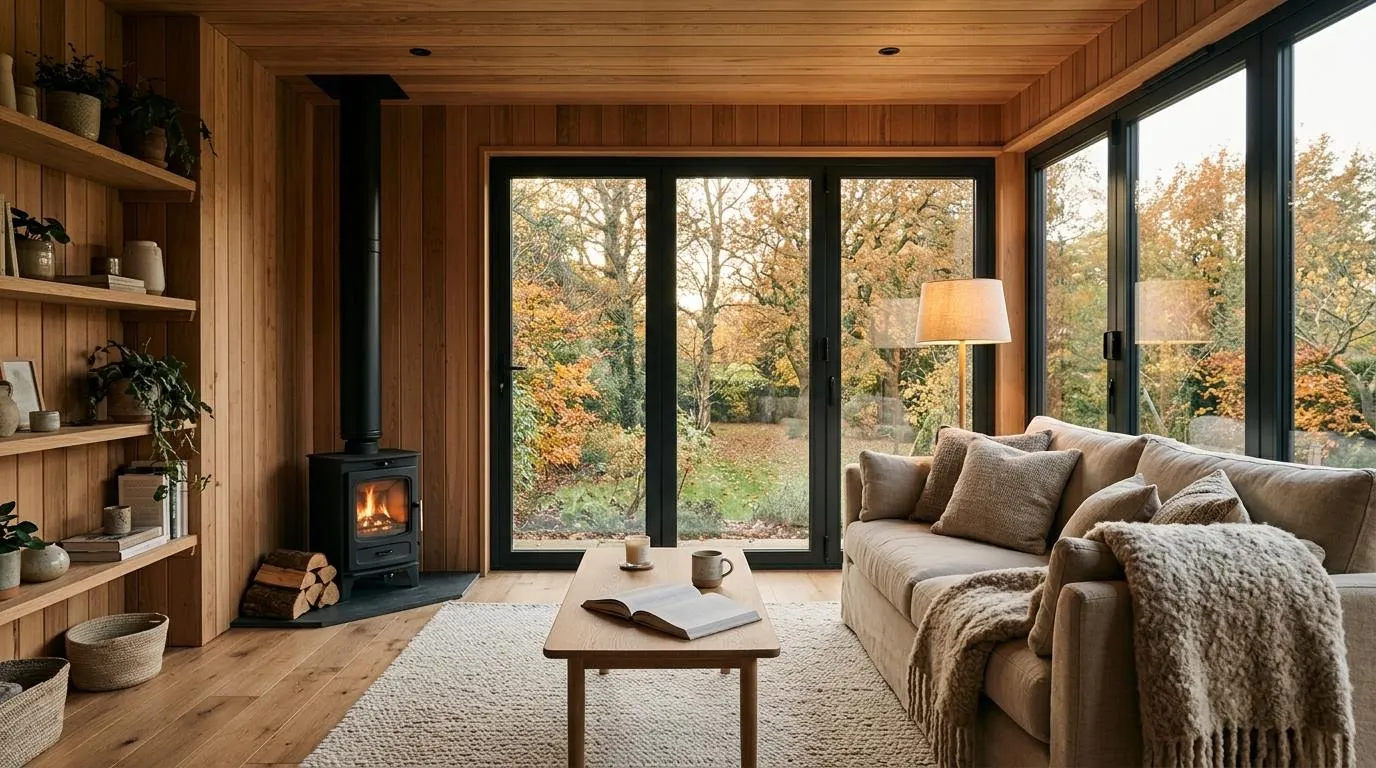
Wood burners and gas
A stove adds a flue, rules and ongoing upkeep. Gas needs a gas supply run and a registered installer. For most rooms, electric heating is simpler.
Cooling in summer
Glass, a dark roof and a south-facing wall all heat a small room. Start with the design: shade, openable windows and good insulation. If you still need cooling, an air-to-air unit gives both heat and cool from one system.
- Ask where the outdoor unit goes and how loud it is.
- Ask about the condensate drain.
- Check your neighbours' windows are not right beside it.
The rules
Electrical work in a garden room is covered by building regulations. A heater on a new circuit is notifiable. The Planning Portal says a new consumer unit, or a complete new circuit, is notifiable, and that a registered electrician can self-certify the work. See our electrics guide.
If the room has a bed, building regulations apply in full. Read garden annexe rules and building regulations for garden rooms.
Match the heating to how you use the room
- Daily office use, all year. You want steady, controllable heat and, in summer, cooling. A heat pump or a good electric radiator with a thermostat suits this.
- A few hours a week, such as a gym or studio. A quick-warming heater on a timer may be enough. Exercise also warms the room.
- A spare room used now and then. A small panel heater may do. Do not over-spend on a system you will rarely use.
- Sleeping accommodation. Building regulations apply, and the heating needs to be designed with the rest of the annexe.
Questions to ask
- What size heater do you advise for this room, and why?
- What will it cost to run? Ask for an estimate in kWh, and check it against your tariff.
- Is the circuit sized for the heater, the lights and the sockets?
- Who installs the heat pump, and is the work guaranteed?
The choice changes your price, so check the garden room cost calculator and read how a price is built. Builders working in Berkhamsted, Amersham and Aylesbury fit all of these. See also garden studios.
Common mistakes
- Heating a leaky room. Fix insulation and draughts first.
- Leaving heaters on. Use a thermostat and a timer so the room warms only when you use it.
- Buying a unit that is too big. Oversized heat pumps and heaters waste money. Ask the installer to size it.
- Forgetting the circuit. Heating draws more power than lighting. The supply must suit it.
- No plan for summer. Shade, openable windows and a cooling option matter as much as winter heat.
Running costs depend on your tariff, your insulation and how you use the room. Ask the builder for an estimate in kWh and check it against your own electricity price.
Heating included in the quote
Ask each builder to quote the heating you want, and to name the make and model. Up to 3 local builders quote. It is free for homeowners.